
Provided by RELIC | Written by Mary Kitiyakara, Senior Librarian
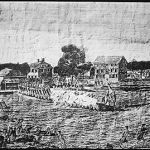
Figure 1: An engraving of the Battle of Lexington and Concord
On April 19, 1775, the Battle of Lexington and Concord took place. It is estimated that 35 to 40 Freemen and Enslaved fought in integrated militia units throughout the 22-hour battle.
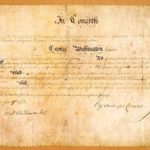
Figure 2: Commission Certificate
for Gen. George Washington, 6/15/1775
George Washington was commissioned by the Continental Congress as Commander in Chief of the Continental Army on June 15, 1775.
In the minutes of the Council of War held at Head Quarters in Cambridge on Oct. 8, 1775, Washington, aware that there were both Free people and Enslaved enlisted, asked the question, “Whether it will be adviseable to re-inlist any Negroes in the new Army—or whether there be a Distinction between such as are Slaves and those who are free? [They] Agreed unanimously to reject all Slaves, & by a great Majority to reject Negroes altogether.” (1)
In the minutes from the Continental Congress that took place in Cambridge, Massachusetts, during Oct. 18 to 24, 1775, the subject was brought up again “Ought not Negroes to be excluded from the new Inlistment especially such as are Slaves—all were thought improper by the Council of Officers?” (2)
By December of the same year, in a letter to John Hancock, the President of the Continental Congress, dated Dec. 31, 1775, Washington stated the following “it has been represented to me that the free negroes who have Served in this Army, are very much disatisfied at being discarded—as it is to be apprehended, that they may Seek employ in the ministerial Army—I have presumed to depart from the Resolution respecting them, & have given Licence for their being enlisted, if this is disapproved of by Congress, I will put a Stop to it.” (3)
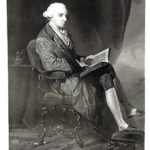
Figure 3: John Hancock, President of the Continental Congress
On Jan. 16, 1776, Congress resolved “that the free negroes who have served faithfully in the army at Cambridge, may be re-inlisted therein, but no others.”
Two years later, a law was passed in the Rhode Island General Assembly, “every able-bodied Negro, Mulatto, or Indian Man Slave” was to enlist in a newly formed regiment. The law further states that all soldiers passing muster will be discharged from service and “be absolutely free.” (4)
However, this came with exceptions for the enslaved and their rights as a patriot versus the rights of those who held them in bondage.
An estimated 5,500 colonial Black American soldiers and Native Americans fought or served in established units, regiments, and as substitutes, Freemen and Enslaved. (5) History has noted their valor, courage, and sacrifice to fight for what all were determined to attain: freedom from being oppressed by unfair laws and treatment, but many are unknown due to their status in society.
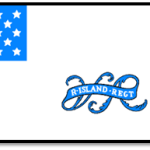
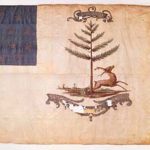
Figures 4 and 5: Flags for the Massachusetts Militia and the 1st Rhode Island Regiment
Unfortunately, the fight for freedom would turn into a recurring battle for several generations following the American Revolutionary War, one that would eventually split the country in two, and another against laws meant to strip Black Americans of their rights as equal citizens, which culminated into the Civil Rights movement.
As we reflect on and honor the sacrifice, courage, and achievements throughout Black History, let us be reminded that freedom is a value that cannot be taken for granted because it comes at a great cost to achieve it, and the willingness to protect it is without exception.
1. “Council of War, 8 October 1775,” Founders Online, National Archives, founders.archives.gov/
2. “II. Minutes of the Conference, 18–24 October 1775,” Founders Online, National Archives, founders.archives.gov/
3. “George Washington to John Hancock, 31 December 1775,” Founders Online, National Archives, founders.archives.gov/
4. Congress.gov. “S.567 – 119th Congress (2025-2026): First Rhode Island Regiment Congressional Gold Medal Act.” February 13, 2025. congress.gov/bill/
5. National Park Service. (2025, February 2). Patriots of Color. U.S. Department of the Interior. nps.gov/mima/
National Archives drawing no. 111-SC-92639- Drawing from engraving by Amos Doolittle, a Connecticut militiaman
Mount Vernon-Commission by the Continental Congress to George Washington image