Like this article? Support us by subscribing here. Your donation will help us continue to provide quality-of-life news and make local impact possible.
By Katherine Mercurio Gotthardt
The statistics are telling: Between 46% and 70% of car seats are not installed properly, according to the U.S. Department of Transportation’s National Highway Traffic Safety Administration (NHTSA) and other organizations. This misuse can range from loose installations to incorrect harness positioning and using the wrong belt path.
To get those numbers down and enhance child safety, Saving Prince William’s Littles is making tremendous strides by providing car seat checks for families with infants and children. Founded by Claire Szanyi in 2017, the 501(c)(3) nonprofit organization emerged from her experience as a new mother who became aware of the misconceptions surrounding car seat safety.
The organization provides free car seat check events at least once a month within Prince William and attends community events to provide car seat education.
Since its inception, Saving Prince William’s Littles has focused on ensuring that every child rides safely. “During car seat check events, we typically see 75% of car seats installed incorrectly,” Szanyi said.
In 2024, the organization also distributed an impressive 140 free car seats, demonstrating its commitment to family support. Szanyi shared that they don’t heavily promote their efforts due to limited grant funding, but the difference they make in the community is significant.
Saving Prince William’s Littles’ origins link back to Szanyi’s maternity leave when she became a certified Child Passenger Safety Technician, she said. Identifying a gap in knowledge about car seat usage, she wanted to bring the valuable principles of car seat safety to her local area.
“I realized that it wasn’t just me who had gotten everything car seat entirely wrong. I asked the founder of Saving Loudoun’s Littles if I could essentially franchise it over in Prince William County. She fully supported this move, so my husband and I created Saving Prince William’s Littles.”
After hosting her first CPST Certification course in 2018, Szanyi organized a car seat check event at UVA Health Haymarket Hospital, launching a series of similar events. Following a temporary pause during the COVID-19 pandemic, the organization resumed in-person car seat checks in July 2020, with a steady demand ever since, according to Szanyi.
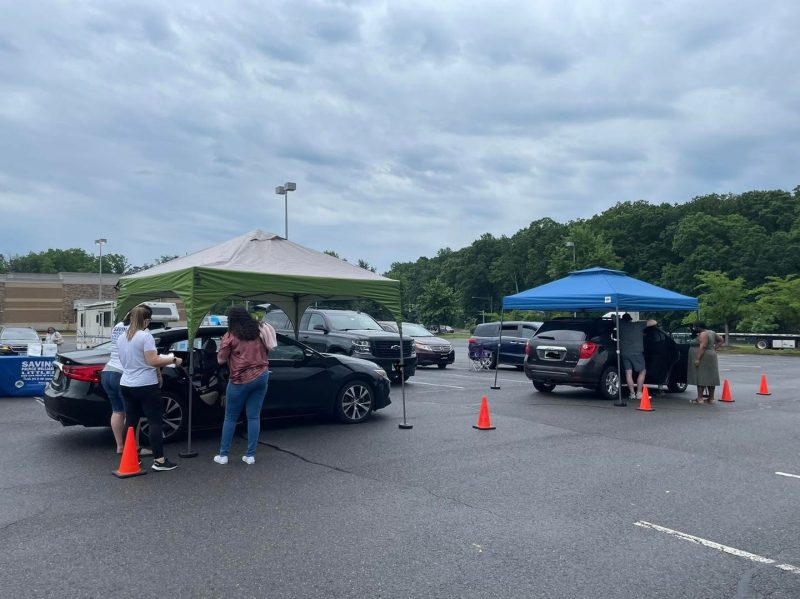
The community can find Saving Prince William’s Littles at events where they provide free car seat checks.
“It’s important to note that many local facilities chose not to renew their CPST certifications during the pandemic, leaving fewer options for families needing guidance on car seat safety,” she said. “This is one reason why our organization is so vital.”
Today, they hold regular car seat checks at least once a month in the Prince William area, with appointments scheduled in convenient 30-minute increments. The program has been a huge success and continues to grow.
“We are so grateful to Joyce Koons Buick GMC, Warrenton Toyota, Dumfries Target, the Manassas Park Fire Station and the Purcellville Volunteer Rescue Station, among others, for having us at their locations,” said Szanyi,
To keep families informed about these check events and CPST certification training, the organization utilizes various platforms. Interested caregivers can visit savingprincewilliamslittles.com/events for information on upcoming appointments, Szanyi said. They also maintain an active presence on social media such as Facebook and distribute a monthly newsletter filled with updates.
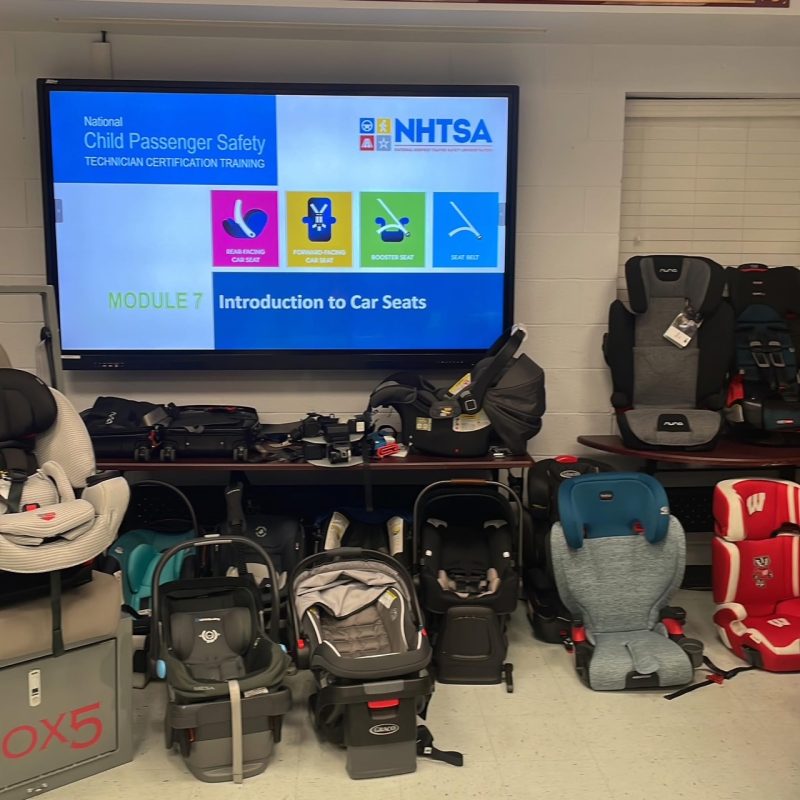
Child Passenger Safety Technician (CPST) training spans four days and includes classroom and practical experience.
Szanyi stressed that the organization is always seeking CPSTs. The CPST training program generally spans four days and consists of both classroom instruction and practical experience. This comprehensive training equips CPSTs to assist caregivers with various child and vehicle types.
“Our goal is to make sure our CPSTs are able to educate caregivers so that the caregiver is able to install and use their own car seat each and every time,” Szanyi said. The next certification course is set for two weekends in November in Manassas Park.
Szanyi encourages the public to take part in the organization’s efforts. “We have an amazing pool of volunteers, but we are always looking to host additional seat check events or educational events in the area, so the more volunteers the better.”
As the organization grows, Szanyi emphasized that the Prince William division is part of a broader network hosting events throughout Northern Virginia as volunteer opportunities arise. Their main goal remains clear: to provide families with nonjudgmental support in navigating car seat safety.
Szanyi also stressed that car seats can be complicated. She invites caregivers to ask any questions or voice concerns, assuring them that the seat check process is straightforward and informative. “Our CPSTs are a great (and non-judgey) resource to reach out to with questions and issues. We e promise a seat check is not
painful, and we’d love to make sure your kiddos are riding as safely as possible,” she said.
In the end, the organization’s top tip for parents and caregivers is simple yet crucial: “Always read your car seat manual and familiarize yourself with your vehicle’s manual regarding car seats.”
For more information on the program, to donate, or find details on volunteer and training opportunities, visit savingprincewilliamslittles.com.
Katherine Gotthardt has written for Prince William Living for more than 10 years. An award-winning author and poet, she can be reached through her website, KatherineGotthardt.com.