
Provided by Patient First
The weather is warming up and running season is here! As with any exercise, it is recommended to stretch before activities, like running. Here are a few tips to help you prevent sprains, stay safe and healthy, and win this running season.
WHAT IS A SPRAIN?
A sprain is the stretching or tearing of ligaments. Ligaments are the bands of tissue that connect bones together throughout your joints. Sprains often occur in ankles, knees, wrists, fingers and back. Mild sprains can be treated at home. Severe sprains may require treatment from a physician, or surgery to repair torn ligaments. Our bodies are constantly stressed by physical activity, so an occasional sprain is not uncommon.
WHAT CAUSES A SPRAIN?
• Athletic activity or exercise• Accidents, such as falling or slipping
WHAT ARE THE SYMPTOMS OF A SPRAIN?
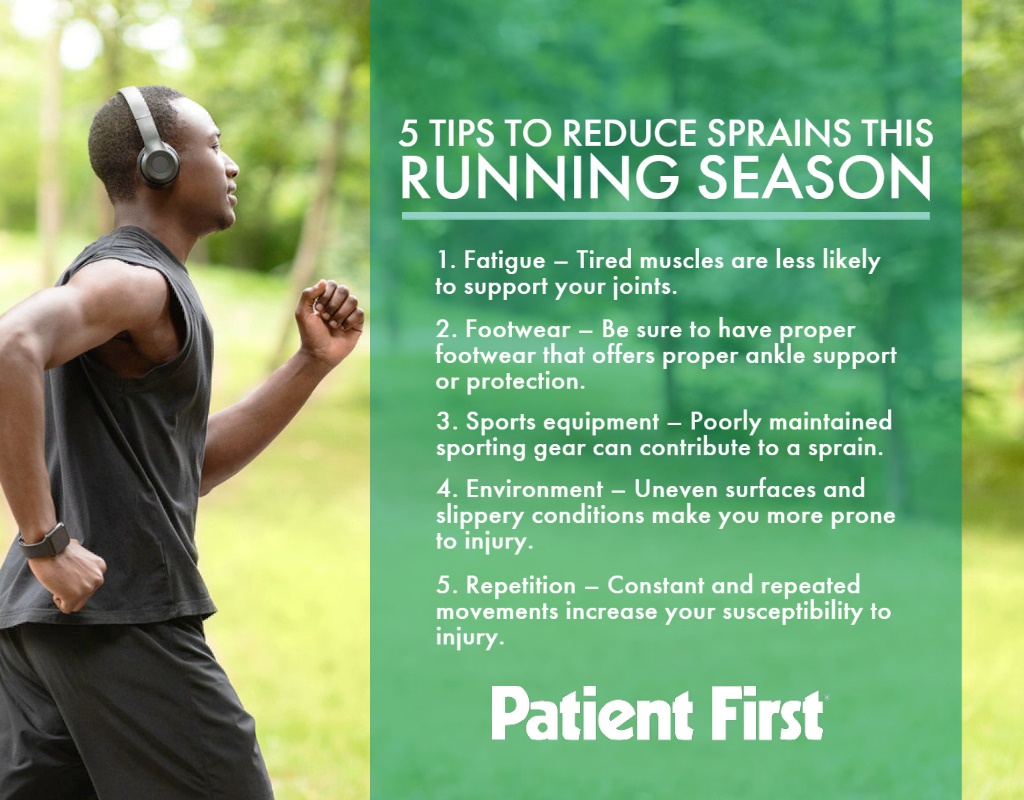
Symptoms vary depending on the severity of the sprain.These may include:• Pain• Swelling• Bruising• Limited movement in the affected joint• Hearing or feeling a “pop” in your joint at the time of injuryYou can also minimize sprain risks by strengthening and conditioning the muscles around your joints. Patient First suggests these five tips to reduce sprains this running season:1. Fatigue – Tired muscles are less likely to support your joints.2. Footwear – Be sure to have proper footwear that offers proper ankle support or protection.3. Sports equipment – Poorly maintained sporting gear can contribute to a sprain.4. Environment – Uneven surfaces and slippery conditions make you more prone to injury.5. Repetition – Constant and repeated movements increase your susceptibility to injury.It can be difficult to differentiate between fractures and sprains. Some general principles of first aid include the following:1. As quickly as possible, put ice to injured area.2. If possible, immobilize the injured area.3. If pain is excessive, or there is a great deal of trouble bearing weight, seek medical attention sooner rather than later.Accidents happen. Patient First treats many injuries on site and is equipped to provide routine digital x-rays of the chest, abdomen, spine, and extremities.