

Like this article? Support us by subscribing here. Your donation will help us continue to provide quality-of-life news and make local impact possible.
By Wendy Migdal
A vacation doesn’t always have to involve months of advance planning or thousands of dollars. Here are
four destinations within a short drive that offer history, outdoor recreation, and culture.
Clarke County, Virginia
As counties go, blink and you might miss Clarke County. It is a rural, agricultural county located between Loudoun County and the city of Winchester. “Clarke County is a place where time feels a little different. When you arrive, you’ll notice that it’s quieter, more relaxed, more friendly, and a more genuine way of life. The natural beauty of the Blue Ridge Mountains and Shenandoah River somehow restores your soul,” says Michelle Brown, Director of Economic Development & Tourism.

Locke’s Mill, an historical grist mill in Berryville. Learn the history of
agriculture and milling at this 18th century waterwheel driven mill. Photo by June Parisi
Clarke County was created out of Frederick County in 1836, when lifestyle differences arose among Frederick’s residents. Those west of Opequan Creek were small farmers of German, Irish, and Scottish descent. Those east of the creek, in what is now Clarke County, had larger estates, were descended from
the original families of the Tidewater area who received land grants from the king, and enjoyed such activities as foxhunting.
Lord Fairfax himself lived — rather humbly, actually, for a lord — in what later became Clarke County, and employed George Washington to do some surveying in the area for him. There’s nothing to visit from Fairfax’s time, but history lovers would be interested in visiting Long Branch Historic Farm and House. Long Branch was home to descendants of that venerable Virginia family, the Carters, and has the manor house you might expect of Fairfax, plus a retirement home for horses. Other historic structures of note are the Burwell-Morgan Mill and Locke’s Mill, grist mills from the 18th and 19th centuries, and the Boyce Railway Depot from the 20th (currently undergoing restoration, but occasionally open by appointment).
Despite its small size, Clarke County has several unique attractions to offer visitors. Blandy Experimental Farm is an environmental research arm of the University of Virginia and is also home to the State Arboretum. There you can walk through a boxwood “library,” along trails of native plants and into conifer
forests and gingko groves. In addition to guided walks, visitors can “dial a tree” to learn more about it or download an app for the Ecology Geocaching Adventure, a type of scavenger hunt.
Clarke County also has several unique opportunities for animal lovers. Blue Ridge Wildlife Center in Boyce is a rescue facility and teaching hospital, but visitors are welcome to go on the Wildlife Walk. It’s a self-guided tour that takes people past the enclosures of their ambassador animals, including the peregrine falcon, red fox, and diamondback terrapin. Serenity Farm Virginia is a healing sanctuary for rescue farm animals, with visits available by appointment. On Saturdays, Silver Maple Farm hosts baby goat snuggle events; make sure to get your tickets online. And then there’s the quirky Dinosaur Land, a theme park where you can stroll amongst 50 life-size dinosaur statues.
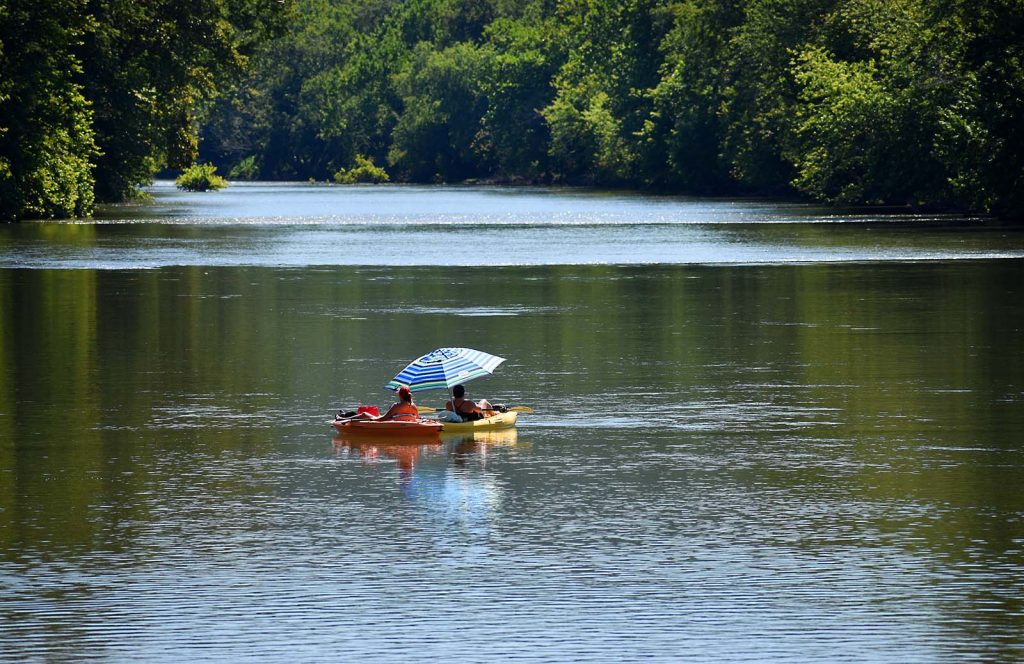
Floating down the Shenandoah River. Rent tubes and catch shuttles at Watermelon RV Park.
The Shenandoah River flows right through Clarke County, and one way to enjoy it is at Watermelon Park, which offers tubing on the river and RV camping. Watermelon Park was once an actual watermelon farm. An eponymous festival celebrated all things watermelon; after bluegrass music was added, it evolved into a bluegrass festival. In the way that things tend to change, camping was added because people were sleeping in the fields after the festival. This year’s Watermelon Picker’s Music Festival will be held at the Clarke County Ruritan Fairgrounds Sept. 6 and 7.
Not surprisingly, another feature of Clarke County is agritourism. Visitors can find a number of farmers markets and fruit and vegetables stores, as well as family owned farms to visit. You can pick peaches, berries, and apples at Mackintosh Fruit Farm, buy some cheese at Harvue Farms, and even make an
appointment to get some alpaca fiber.
Berryville is the county seat and the largest town, at about 4,500 people. The historic district includes several attractions, including the Josephine School and Museum, located in the former grade school built by African American residents in 1882 and now on the National Register of Historic Places. On a weekend, you should be able to take in a concert or film at the Barns of Rose Hill, made up of two converted dairy barns, but if you make it on a Thursday, you may be able to drop in on an authentic old-time, blues or bluegrass acoustic jam session. Berryville also has quaint B&B’s for lodging.
The City of Falls Church, Virginia
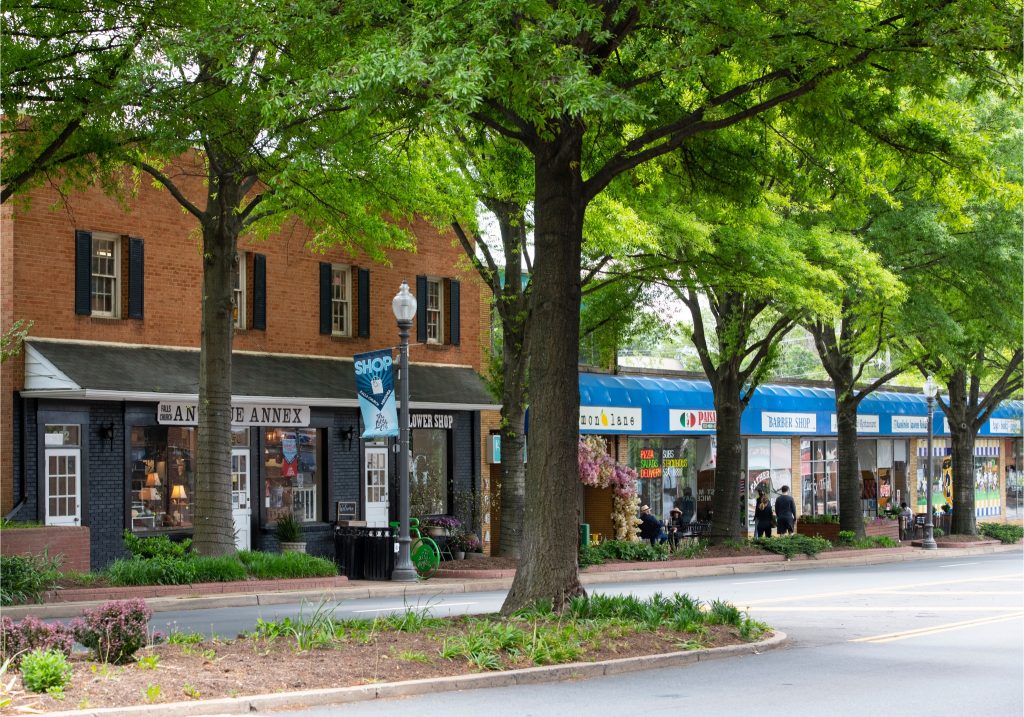
Broad Street
We often overlook the places that are right in our own backyards, but the City of Falls Church has plenty to offer for a weekend of entertainment. “The City of Falls Church, also known as ‘The Little City,’ is . . . the smallest city in Virginia, covering just 2.2 square miles,” says Sarah Swinton-Nussbaum, Marketing
Manager for the city. “Its urban village feel is all about walkable and bike-friendly streets, neighborhoods, parks, and green spaces that host fun annual and special community events and activities.”
Consider spending a day on Washington and Old Dominion Railroad Regional Trail, especially if you enjoy biking. As the name implies, the park runs along the bed of an old railroad, and so it is both flat and narrow (and known as “Virginia’s skinniest park”). The 45-mile paved trail is easy for biking but also used by walkers and skaters, and visitors can exit the trail at many locations for some sustenance.
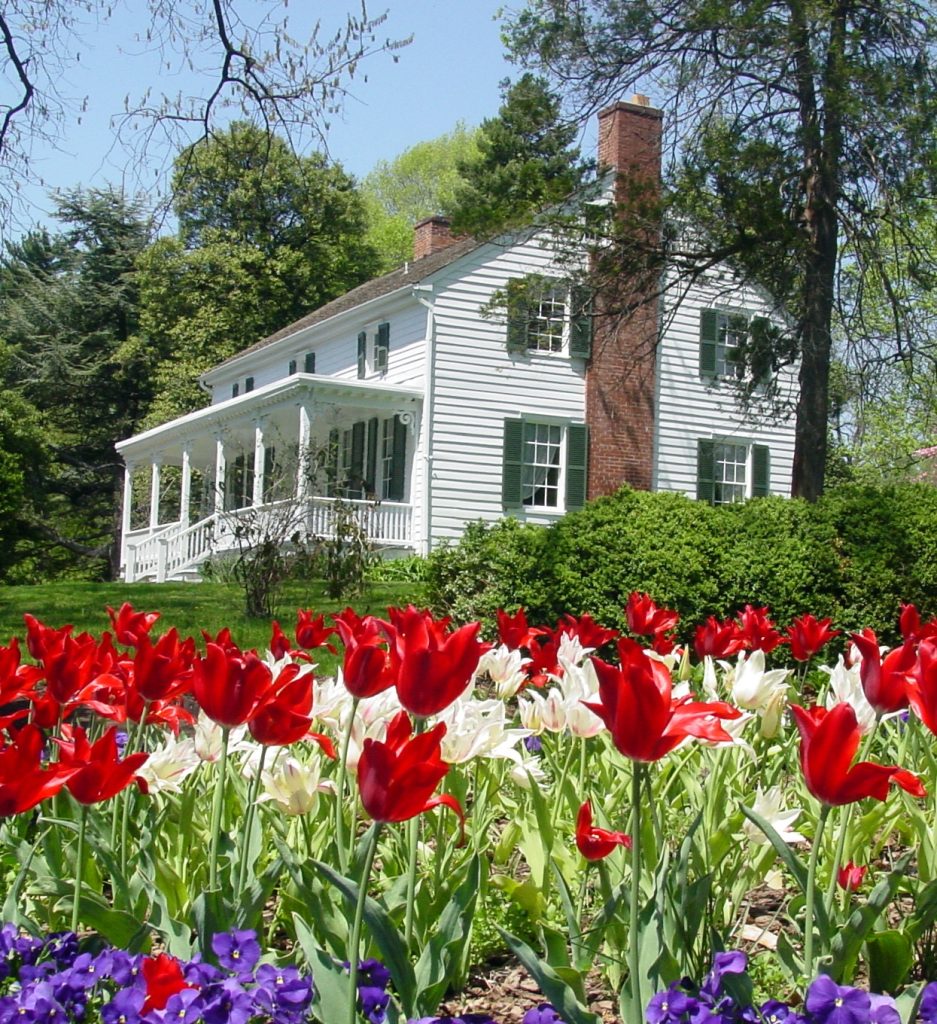
Cherry Hill Farmhouse
Another great way to spend an afternoon is by taking a self-guided walking tour of the numerous examples of Victorian-era homes centered around Broad Street. The Victorian Society of Falls Church has a map you can find online, which features nearly 20 houses and churches (though not the Falls Church from which the town gets its name–that structure dates back to 1769, well before the Victorian era). The houses are all
privately owned, but visitors can take a guided tour of Cherry Hill Farmhouse, which is owned and operated by the City of Falls Church. The house has been restored to the way it appeared around the time of the Civil War. Be sure to look for the secret hiding compartment where the owner, William Blaisdell, hid his silver from both sides during the war.
Included on the Victorian walking tour are two sites that belonged to the Tinner family, an influential African American family in Falls Church after the Civil War. The Tinners bought a large parcel of land and subdivided it for their family, and the houses that were built there became known as the Tinner Hill neighborhood. A local branch of the NAACP began in this neighborhood to protest a segregation law that the city enacted in about 1915, which was later voided by a Supreme Court decision. Today a historical park located on a former Tinner property contains markers that document the struggle for civil rights in Falls Church.
“Downtown Falls Church is full of life, with several beautiful murals and art sculptures, as well as locally owned shops and restaurants that offer a wide range of ethnically diverse cuisine,” says Swinton-Nussbaum. It’s known for its large, Saturday morning farmers market, antique and thrift shops, coffee shops, and Eden Center, the largest Vietnamese commercial area on the East Coast.
For evening entertainment, take in some live music at the State Theater, once a theater for popular movies. The balcony seats and lobbies are from the original 1936 construction, while the main floor now features a dining/dancing area and bars.
Shepherdstown, West Virginia
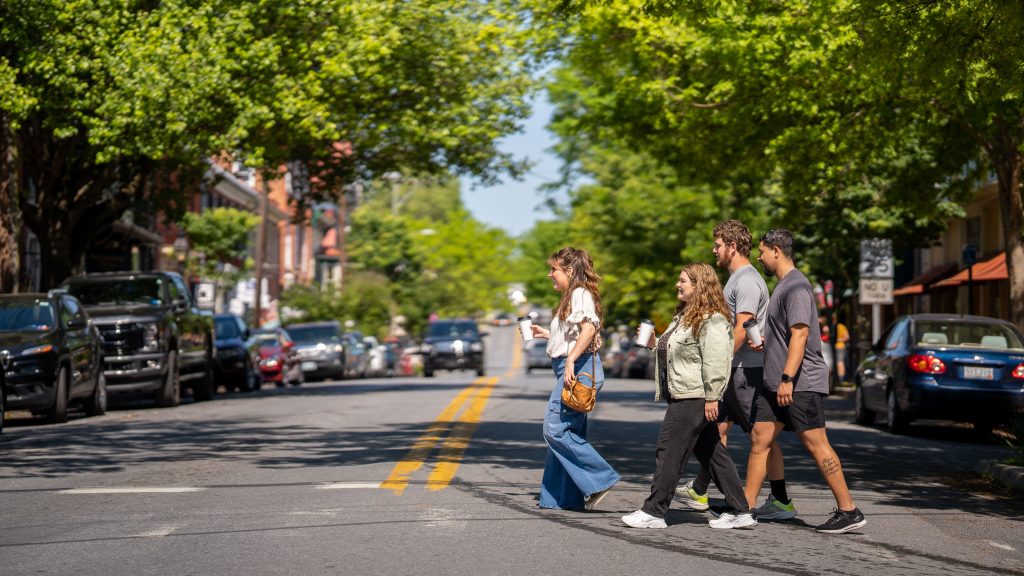
Shepherdstown
Shepherdstown, West Virginia sits on a bend in the Potomac River, not far from Sharpsburg, Maryland, and only about an hour and half’s drive from the Prince William area. Its colonial history dates back to 1730, but today it is still a fairly small college town.
In fact, Shepherd University hosts one of the town’s biggest events of the year, a theater festival that has been held every July since 1991. The Contemporary American Theater Festival includes four new plays this year, plus a bonus event.
Shows in the past have gone on to regional, Broadway, and film productions, so you may be able to say, “I saw it first.” The festival runs from July 5 to 28. Performances are repeated frequently, so that it’s possible to see all the plays in a weekend.
The festival offers much more for those who want to dive deeper: brunches with actors and directors, backstage tours, lectures, and post-show discussions. All events are ticketed individually, and passes are available for the season.
There are plenty of other things to do in this quaint historic town, as well. History enthusiasts will enjoy the Shepherdstown Museum, the monument to steamboat inventor James Rumsey, and one of the few opera houses remaining from the golden age of opera houses, the turn of the last century. It still hosts events.
Along those same lines, O’Hurley’s General Store offers an old-time West Virginia shopping experience.
“Shepherdstown may be the oldest town in West Virginia, but it has a contemporary flavor with incredible dining, arts, and outdoor recreation opportunities,” says Annette Gavin Bates of the Jefferson County Convention and Visitor’s Bureau. The dining scene in particular is “tremendous.” A big draw for people
from the Prince William area is the Bavarian Inn & Brewing Company. In addition to being a restaurant, the Bavarian is an 11-acre, European-inspired resort with fantastic views of the Potomac River. Other great dining spots are Bistro 112, The Press Room, Lilah, Alma Bea, and Blue Moon.
For walkers and bikers, Shepherdstown is also right on the C&O Canal Trail, and it’s a 13-mile trip to Harpers Ferry. But there are plenty of artisanal shops and unique restaurants right in Shepherdstown, so no need to go far. Most of the historic district is on the National Register of Historic Places and consists of
many 18th and early 19th century row houses. If nothing else, visitors will enjoy strolling around and soaking up the ambiance.
St. Mary’s County, Maryland
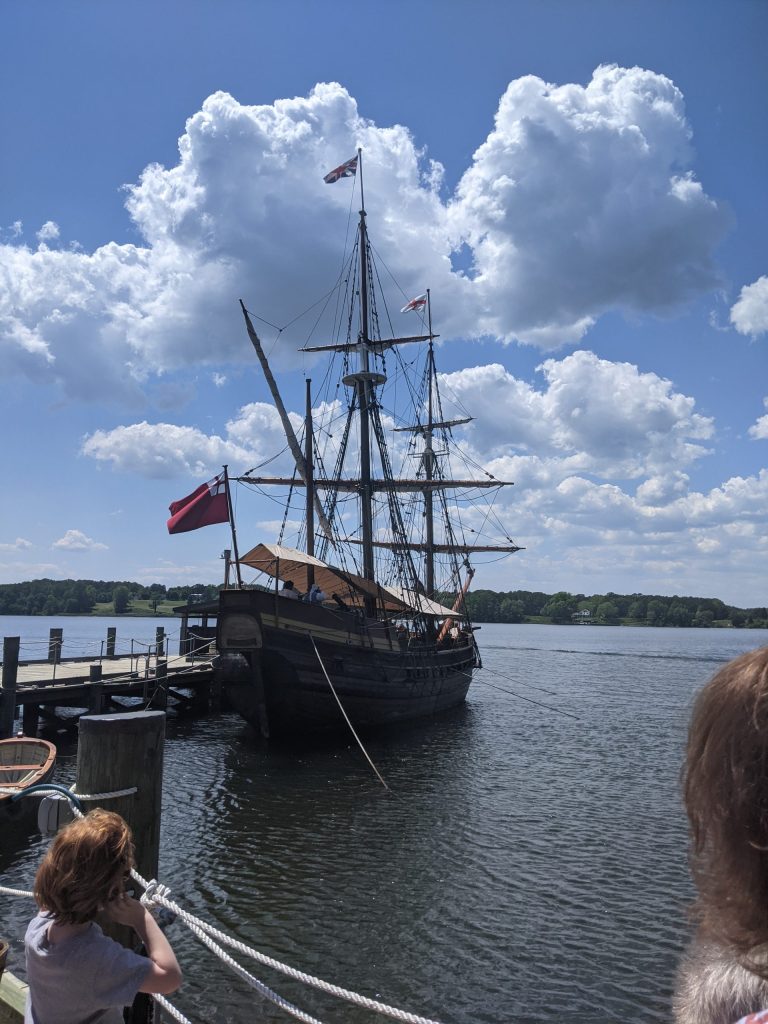
A replica of the Dove, the ship that brought the first settlers.
Only 13 years after the Pilgrims set foot at Plymouth Rock, the first settlers arrived at St. Clement’s Island, in what is now St. Mary’s County, Maryland, and they also arrived for religious freedom. The colony of Maryland was started by the Calvert family, who inherited the title of Lord Baltimore, as a safe haven for Catholics. In 1634, the appropriately named Ark and Dove arrived on the island, though settlers soon moved to the mainland. They befriended the local Yaocomico tribe and purchased land from them to build the first capital, St. Mary’s City. Today, the island is a state park and includes a museum that is accessible by water taxi.
The original 13 colonies were mainly settled by Protestants, and Catholics were often persecuted. Thus, the Maryland Toleration Act of 1649, which granted religious freedom to any Christian denomination, stood as an early signpost on the road to religious freedom in America. Interestingly, much later, St. Mary’s County
became home to many Amish and Mennonite transplants who came from Lancaster County, Pennsylvania, in the late 1930s. The Amish community interacts with the public at the Loveville Produce Auction, local dairies, and tack shops.
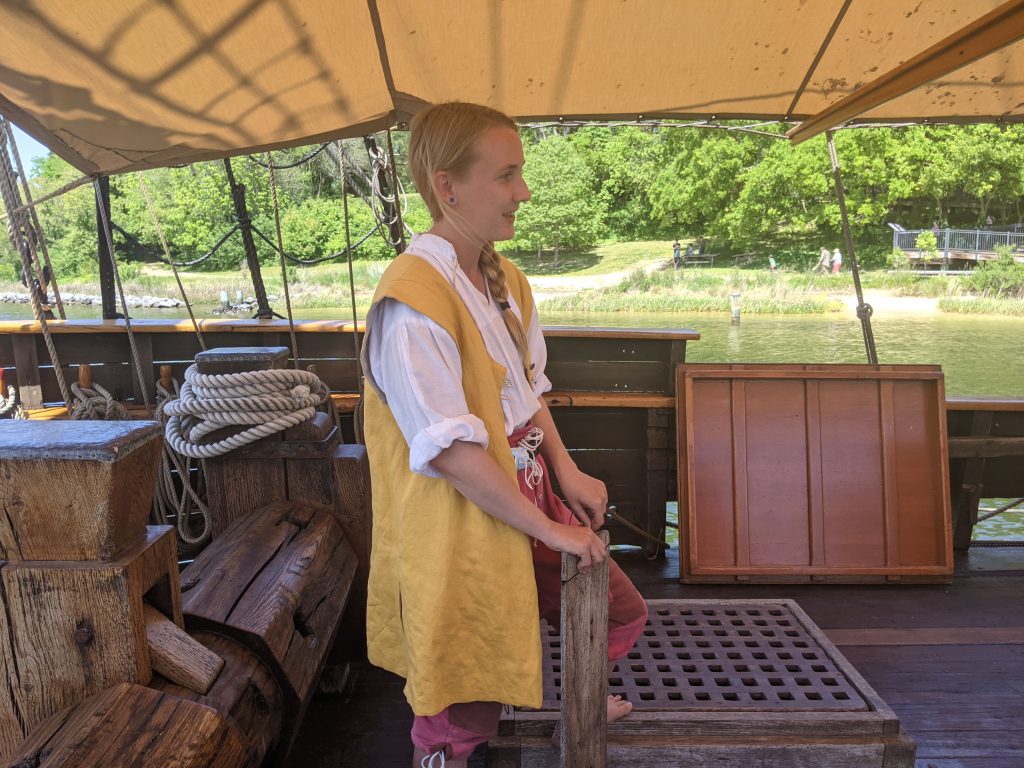
A guide aboard the Dove
Despite the presence of the Patuxent Naval Air Station, the county retains a small-town, rural feel. Visitors can stop by not one, but several, farmers markets, and at any number of roadside farmstands, to purchase fresh, local produce. The relatively quiet roads are also a big draw for bicyclists.
Located at the very tip of Southern Maryland, St. Mary’s County is — paradoxically speaking — rooted in water. Most of the county’s five state parks are located along the bays and rivers. Visitors can take sunset cruises, rent kayaks on the Potomac, Patuxent, and St. Mary’s rivers, and view one of the county’s four
lighthouses dating back to the 1830s.
For arts and entertainment, head to Leonardtown, named after one of the members of the Calvert family. Always the county seat, Leonardtown includes restaurants, shops, and old-fashioned charm. A local says, “Some of my St. Mary’s favorites: walking around Leonardtown, the free River Concert Series on Friday
nights, Sotterley Plantation, St. George’s Island and Point Lookout State Park and Lighthouse.”
Wendy Migdal is a freelance writer who has lived in the Northern/Central Virginia area since 2000. She enjoys history, reading, and all things dog.