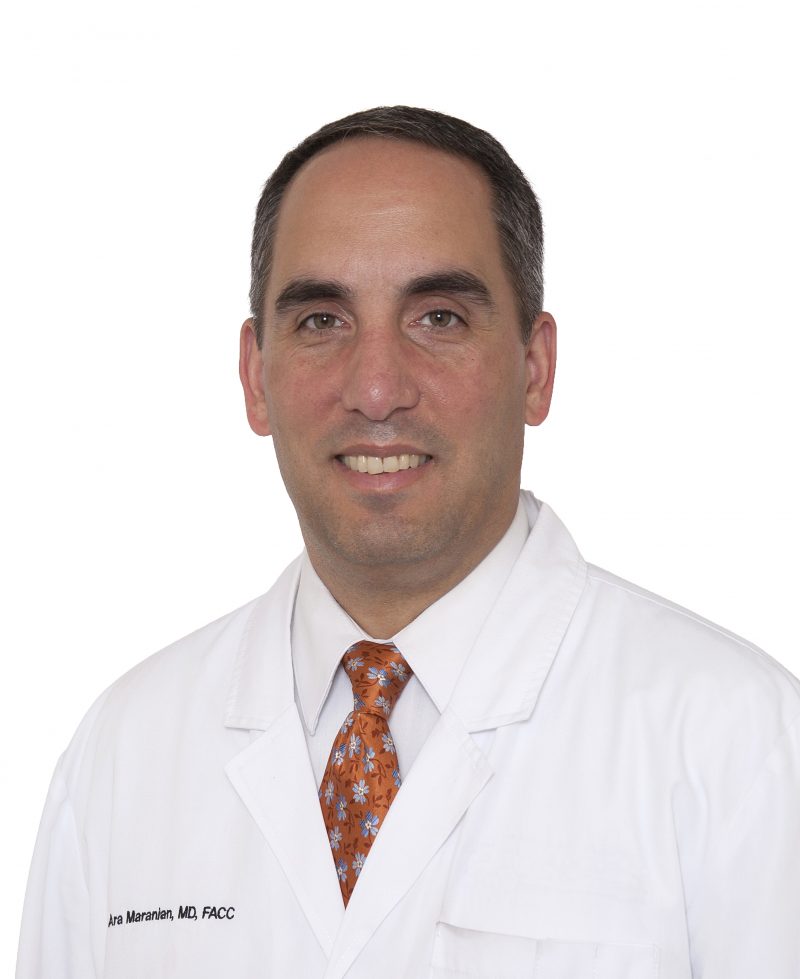
Ara Maranian, M.D.
Provided by Novant Health UVA Health Systems
As a cardiologist based at Novant Health UVA Health System Prince William Cardiology, Ara Maranian, M.D., FACC, has a front-row seat to one of the COVID-19 pandemic’s most striking elements.
The statistics from spring 2020 were interesting to the cardiology community, as the number of patients being hospitalized for heart care was decreasing, but people dying at home from heart issues was on the rise.
The connection? People having heart problems were delaying treatment for fear of contracting COVID-19 at a hospital.
This trend has continued into the winter. However, delaying heart care can make treatment and recovery more difficult and could even lead to a worse outcome.
Below, Maranian shares answers to some of the questions his patients ask most frequently about COVID-19.
What special risks, if any, does COVID-19 present to people with heart disease/conditions?
Patients with heart disease are at higher risk of getting really sick from the virus, to the point where they may require hospitalization or intensive care. By “heart disease,” I mean common conditions, such as uncontrolled high blood pressure, congestive heart failure (an inability of the heart to adequately pump blood), and coronary artery disease (plaque buildup in the walls of the blood vessels).
What special precautions should heart patients take to protect themselves from becoming infected?
What I tell all my patients regardless of heart history is to always wear a mask when leaving the house, to avoid large gatherings, to maintain social distancing, and to wash their hands frequently.
Should heart patients be vaccinated for COVID-19?
Yes! I am advising my patients to get vaccinated against COVID-19 once they are able. Some patients are worried that the vaccine hasn’t been studied adequately. And due, in large part, to a lot of misinformation that’s been circulating, people are rightfully feeling scared and anxious.
I tell my patients that the technology that forms the basis for the vaccine has been around for a while and has been extensively studied by researchers across the world. This technology involves using your body’s own defenses in preventing you from getting sick.
The vaccine has, by now, been administered safely to hundreds of thousands of people. I am comfortable with the process that the vaccine has gone through and do not feel it is rushed. The technology of mRNA vaccines allows for faster production and, having read the published data, I feel the studies were similar to those done with older vaccines. I am confident enough with the data that I have already received both doses.
Given the steeply climbing rate of hospitalizations and deaths that we are seeing, widespread vaccination (along with masking, social distancing and hand washing) is currently our way out of the current crisis.
Have you seen any evidence of heart damage from COVID-19 in your patients?
I have seen some patients who have long-term cardiac issues related to the virus, yes. Some contracted the virus months ago and still seem to have problems with low blood pressure, high heart rate, abnormal heart rhythms and low oxygen levels that caused them to come see us initially. However, recent data suggests these long-term impacts are not as common as initially thought after earlier, smaller studies.
Any final words of advice for heart patients?
I have been closely monitoring my patients who have a history of COVID-19 infection. Frequent office visits, vital signs (e.g., blood pressure, heart rate and blood oxygen levels), and diagnostic tests such as electrocardiograms (EKGs) and, for some, echocardiography or cardiac MRI are all crucial elements in making sure that people are on the road to recovery.
The coronavirus pandemic is a crisis unlike one we’ve ever seen. I am so impressed by the patients that I see in my clinic; how they’ve been working so hard to care for themselves and their families during this difficult time.
We will get through this, but it’s going to take everyone’s help! Wear a mask, wash your hands, and, once you’re able to, I urge everyone to get vaccinated.
For more information on heart and vascular services at Novant Health UVA Health System, visit NovantHealthUVA.org/Heart. For more information about COVID-19 and the COVID-19 vaccine, visit NovantHealthUVA.org/coronavirus.